Farm


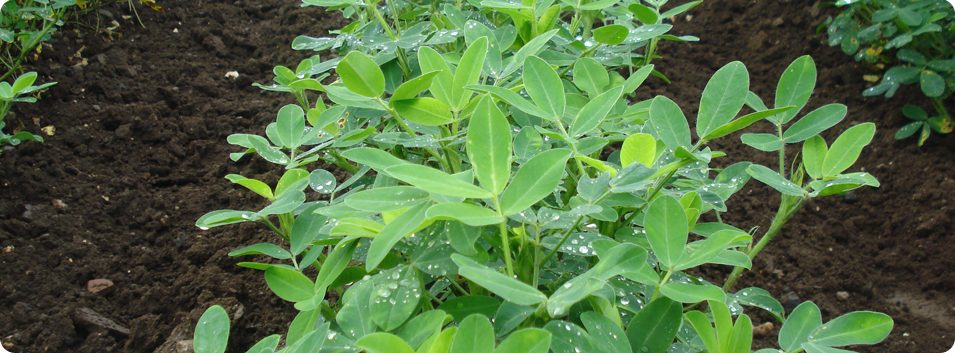
Our procurement experts select regions of farm from which the peanuts are procured according to the type/variety of ground nut, type of soil and amount of average rainfall. This is very important for getting aflatoxin free in shell. Selected farm produce are even procured in bulk from various APMC (Agriculture Produce Marketing Committee) by experts.

Quality Check


It is essential to have a full-proof system which can receive, clean, store peanuts within a very short time, particularly during the harvest season. Each lot of peanuts that come to our unit is tested and analyzed in our in-house lab mainly for aflatoxin, yield, moisture, and FFA etc.

Classification of Inshells


The inshells are separated from dust, mud, stones, stalks, leaves, shriveled and undeveloped pods and small inshells in a Classifier Separator.

De-Stoning


The heavy stones and mud balls are removed in the de-stoner.

Inspection & Sorting


The uniform sized inshells are checked visually for removal of damaged and discolored inshells.

Magnetic Seperation


The ferrous impurities like nails, nuts, bolts etc. are separated by Magnetic Separator.

Shelling


The inshells are shelled and separates kernels and shells.

Classification of Pods & Kernels


The inshells/pods and very small kernels are separated from good kernels. The peanuts are then sent to intake bins for stage 2 of the process.

Intake bins


The peanuts are bought into this bins through Z type bucket elevators. This bucket elevators transports the peanuts from one machine to other avoiding scooping through out both stages of process.

Intake bins


The peanuts are bought into this bins through Z type bucket elevators. This bucket elevators transports the peanuts from one machine to other avoiding scooping through out both stages of process.

Classification of Kernels


At this stage impurities such as straw , sand, small stones, paper etc. are removed by classifier separator.

Magnetic Seperation


Ferrous impurities are separated in this stage of process using by powerful magnets.

De-Stoning


Destoners separates stones from a continuous product stream. Reliable removable of high density impurities such as stone and pieces of metal and glass is achieved on the basis of differences in specific gravity.

Vibro Grading


Heavy duty vibro-grading machine is used for grading of granular material in to a heavy mixed and light fraction e.g. removing impure matter such as shriveled kernels, ergot, light kernels, pods etc. by grading the peanuts in to a heavy mixed and light fraction.

Bichromatic Colour Sorting


The peanuts then passes the process of optical inspection by which contaminants such as discolored peanuts, rot, dark peanuts and foreign materials are removed from final product. We use Sortex machine (Z+3BL) for this process: It is combination of the most advanced cameras and a shape recognition identifier that identifies the widest range of foreign material, extraneous matter , smaller spot defects , finer product damage and subtler colours.

Aspiration


A good aspirations system is vital for efficient operation of plant and for maintaining sanitation in the plant. Our aspiration system is integrated and engineered to match the equipment of the processing plant.

Uniform Gradation


Grading is the process of separating out broken kernels and grading the nuts in 5 different uniform size by diameter and thickness. This is achieved using two classifiers.

Metal Separation


Online metal separator detects and separates any kind of metallic foreign material before packing of the final product.

Online Auto Sampling


Samples are automatically drawn for analysis from a continuous process stream. The samples are tested in our in-house laboratory for mycotoxins, especially aflatoxin. We are the first in the country to implement in-house aflatoxin testing on a continuous basis from raw material to finished product.

Online Computerized Packing


Jute bags, food grade HDPP bags, woven PP bags and jumbo tote bags packing options available. Online computerized packing from 5 kgs. to 1000 kgs. bags is possible.

Lab Analysis


The peanuts are sent for its final analysis to our in-house laboratory. Here it goes through various stages of tests to determine the highest quality. Our in-house lab is equipped with the most modern testing equipments and aflatoxin testing machines.

Loading & Stuffing


All our peanuts that are exported are stuffed into the containers at the factory. Utmost care and attention is given to loading and stuffing of peanuts into the container to ensure the delivery of the peanuts in complete, clean and undamaged condition.

Click below to download pdf
Peanuts originated in South America, where they were cultivated by Indians for at least 2000 years. As early as 1500 B.C., the Incans of Peru used peanuts as sacrificial offerings and entombed them with their mummies to aid in the spirit life.

Spaniards and Portuguese slave traders introduced them to Africa and Europe, and slaves introduced them to the American South.

Chocolate manufacturers use 20% of the worlds peanuts (2008).

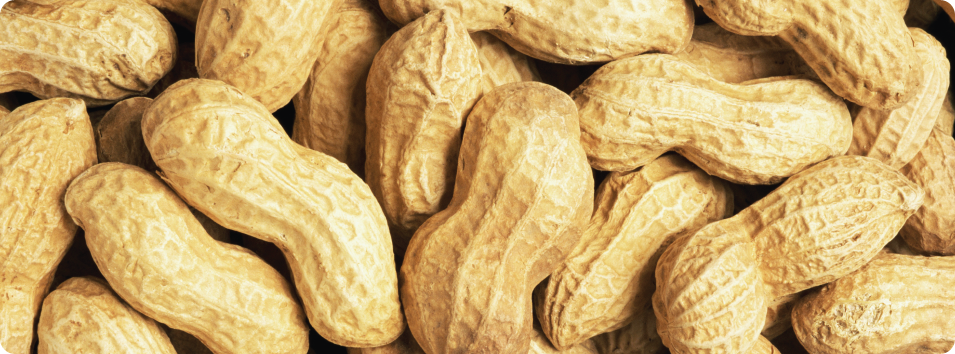
Though there are several varieties of peanut, the two most popular are the Virginia and the Spanish peanut. The Virginia peanut is larger and more oval in shape than the smaller, rounder Spanish peanut. Unshelled peanuts should have clean, unbroken shells and should not rattle when shaken.

Dr. George Washington Carver researched and developed more than 300 uses for peanuts in the early 1900s; Dr. Carver is considered "The Father of the Peanut Industry" because of his extensive research and selfless dedication to promoting peanut production and products.

The U.S. produced about 4.1 billion pounds of peanuts in 2004.

Adrian Finch of Australia holds the Guinness World Record for peanut throwing, launching a peanut 111 feet and 10 inches in 1999 to claim the record.

Tom Miller pushed a peanut to the top of Pike's Peak (14,100 feet) using his nose in 4 days, 23 hours, 47 minutes and 3 seconds.

The U.S. produces only about 6% of the world crop.

In the U.S., annual peanut production (about 1.5 million tons per year) often exceeds the production of beans and peas combined.

India & China together produce almost 2/3rds of the world crop.

Historically, the largest producer of peanuts in the world was India, but production in China overtook Indian production in the mid-1990s. For the period 1996 to 2000, China produced almost 40% of the world crop, and India almost 25%, with the U.S. in 3rd place with almost 6%

Worldwide, about 2/3rds of the peanut crop is processed for peanut oil.

20% of the world's peanut production is used in candy.

Peanut oil accounts for 8% of the worlds edible oil production.

Americans eat 3 pounds of peanut butter per person every year. That's about 700 million pounds, or enough to coat the floor of the Grand Canyon!

March is National Peanut Month. National Peanut Month had its beginnings as National Peanut Week in 1941. It was expanded to a month-long celebration in 1974.

One acre of peanuts will make 30,000 peanut butter sandwiches.

One acre of peanut plants yields about 2,860 pounds of peanuts.

Two peanut farmers have been elected President of the United States: Thomas Jefferson and Jimmy Carter.

Peanuts are also called goobers, goober peas, pindars, ground nuts, earth nuts, monkey nuts, and grass nuts.

Peanuts contain about 28% protein, 50% oil and 18% carbohydrates.

Peanuts are members of the pea family.

The official state crop of Georgia is the peanut. Georgia produces almost 1/2 of the total U.S. peanut crop. More than 50% of the crop goes to peanut butter production (2002).

Georgia is the largest producer of peanuts in the U.S.

The first peanuts grown in the United States were grown in Virginia.

Mr. Peanut was created by 13 year-old Antonio Gentile in a logo contest held by Planters in 1916. He won the grand prize of $5.00. His drawing of a peanut person with arms and crossed legs was refined by a professional illustrator who added the top hat, monocle, white gloves and cane.

What is supposedly the World's Largest Peanut is in Turner County. A 20 foot tall peanut, it is a monument to the importance of the peanut in Georgia history.

Content on this page requires a newer version of Adobe Flash Player.

Get Adobe Flash player


THE CULTURE OF AGRICULTURE
India is the second biggest producer of peanuts in the World after China. India and China produces about 2/3rds of total peanut production of the World. Annual production of peanuts in India exceed 6 million metric tonnes. The two major varieties of peanuts produced in India are Bold (Virginia) and Java (Spanish).

The winter crop of peanuts is rain-fed crop whereas the summer crop is irrigated. 70% of the winter crop is the bold variety and 85% of the summer crop is Java variety

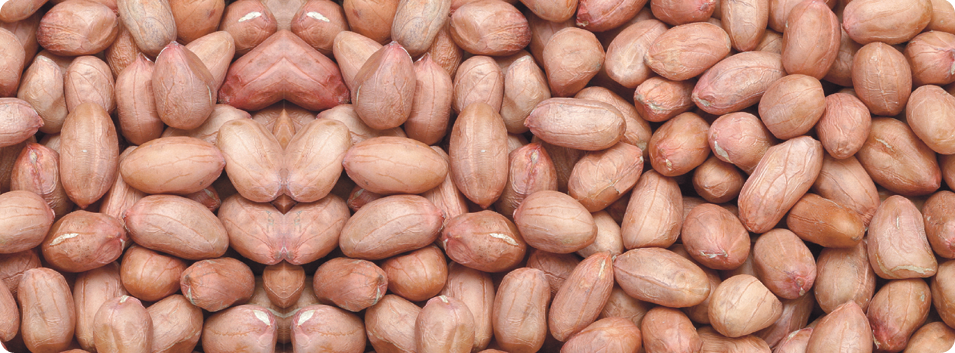
The Bold variety peanuts are typically red skinned with elongated shape. The Java variety peanuts are pink skinned with round spheroid shape.

'Varieties and Sizes'

BOLD : 38/42, 40/50, 50/60, 60/70, 70/80, 80/90, 80/100

JAVA : 60/70, 70/80, 80/90, 80/100
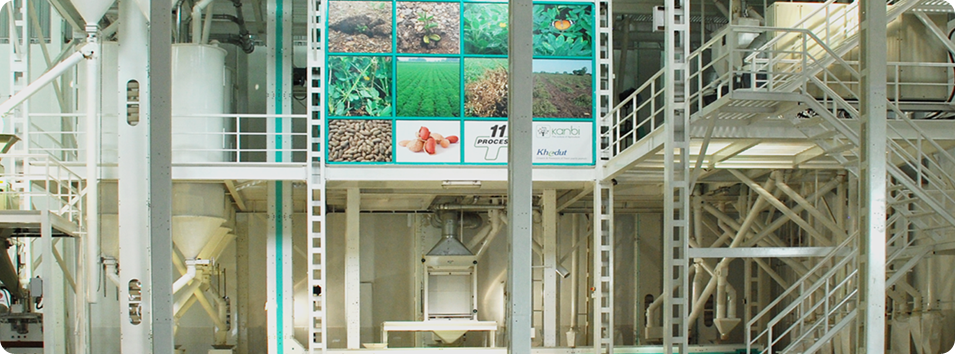
Our state-of-the-art ISO:22000:2005 certified processing plant where all of our products are cleaned, sorted, graded, and packed without ever being exposed to any kind of human touch.

Our processing unit for peanuts is first and biggest of its kind in India, with peanut processing capacity in excess of 120 metric tonnes per day. It is equipped with latest sorting, grading and cleaning machines from Buhler GMBH, S + S Sorting and other reputed companies.
The produce remains free from human touch while it passes through 14 different machines and 11 different processes.
The unit is ISO 22000:2005 certified with accreditation from TUV DAR.
STAGE 1 STAGE 2


Only Kanbi products passes through more than 11 different processes for uniform grading, optical sorting and automatic packing.
Kanbi recognizes the significance of the quality assurance that we guarantee to all our customers. We grow our produce on our own farms and through contract farming whereby other farmers and growers are under contract with us to produce the quality desired by us. The produce then undergoes '11+ process' of cleaning - grading - classification - de-stoning - metal separation - sterilization - packing and certification of quality at our ultra modern ISO:22000 certified processing plant. The plant is equipped with the latest grading and sorting machines from Buhler, Switzerland. The produce is processed under strict sanitary conditions and is never exposed to human touch. The process conditions are constantly monitored and regulated to ensure the quality standard. The final product is released only after a series of sensory and analytical tests in our in-house laboratory complying with prescribed standards.


KHEDUT FEEDS & FOODS PVT LTD
Taluka Sangh', Gundala Road
Gondal - 360 311
Gujarat | INDIA
Ph: + 91 90993 18181 / +91 98243 29294
Email : Info@kanbi.in

If you are planning a visit to our plant the following information may be useful to you in finalizing your tour program. Feel free to get more help from us whenever needed.

Distance from Gondal in Kilometer & Miles (approx)
Rajkot : 40 kms / 25 Miles
Mumbai : 800 kms / 500 Miles
Ahmedabad : 260 kms / 160 Miles
Delhi : 1170 kms / 725 Miles
- Direct flights from Mumbai (Bombay) to Rajkot are available. It takes about 45 minute by flight to reach Rajkot from Mumbai.
- Nearest International Airport from Rajkot. It generally takes about 04 Hours from Ahmedabad to Rajkot by Road and another 30 Minutes from Rajkot to Our Plant.